
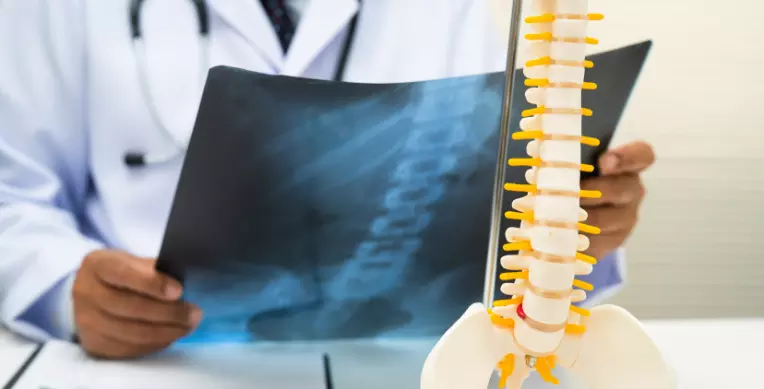

Back or neck pain can become confusing when daily movement changes, symptoms travel into an arm or leg, or conservative treatment has not brought enough improvement. Dr. Larry Davidson has observed that the question of minimally invasive spine surgery should begin with a careful look at the person, not the procedure. A smaller incision does not automatically make surgery the right choice, and candidacy depends on whether the suspected source of pain can be treated safely through a focused surgical approach.
The best conversations about surgery are specific. Patients need to understand how symptoms, imaging, diagnosis, anatomy, and health history fit together before a surgeon recommends any procedure. This kind of review helps set realistic expectations and gives patients better questions to bring into the consultation.
Patient Selection Starts With the Symptom Pattern
Symptoms often provide the first clue about whether a minimally invasive approach might be considered. Pain that travels from the spine into the buttock, leg, shoulder, arm, or hand can suggest that a nerve is being compressed, especially when it is paired with numbness, tingling, or weakness. The location of those symptoms matters because it helps the surgeon compare what the patient feels with what appears on imaging.
A person who has mild discomfort after a long day of sitting is different from someone who cannot walk a normal distance because of leg pain, weakness, or nerve-related symptoms. Surgical discussions usually become more focused when symptoms are severe, do not improve with appropriate nonsurgical care, or begin to interfere with daily tasks. That kind of threshold keeps the conversation centered on function, severity, and medical need rather than the appeal of a smaller procedure.
Imaging Needs to Match the Story
Imaging can show disk changes, spinal narrowing, arthritis, or instability, but a scan by itself does not decide candidacy. Many adults have age-related findings on MRI or CT scans that do not match their symptoms. The more useful question is whether the imaging finding explains the patient’s pain pattern, exam findings, and activity limits.
A narrowed nerve opening on the right side of the lower spine may fit with right-sided leg pain, numbness, or weakness. MRI or CT scans are part of the evaluation before foraminotomy, a procedure that widens the opening where a nerve leaves the spinal canal. The scan helps locate the compression, and in some cases, an injection can help confirm whether that level is causing symptoms. Dr. Larry Davidson encourages a patient education approach that keeps this distinction clear: imaging supports the decision, but it should not replace a full clinical evaluation.
Diagnosis Shapes the Surgical Question
Minimally invasive spine surgery refers to several approaches, not a uniform procedure. It is a group of approaches that may be used for selected problems, such as a herniated disk, spinal stenosis, foraminal narrowing, instability, or certain forms of degenerative change. The diagnosis helps determine whether the goal is to remove disk material, create more room around a nerve, stabilize part of the spine, or address another structural issue.
A diskectomy, for instance, focuses on removing disk material that is pressing on a nerve. It’s a procedure that is considered when a herniated disk causes severe arm or leg pain, numbness, weakness, or difficulty with daily tasks. A fusion has a different purpose. Spinal fusion is a surgical procedure that connects two or more bones in the spine, often to address instability, deformity, or a damaged disk after removal. The type of diagnosis changes the surgical target, the recovery expectations, and the kinds of risks that should be discussed.
Anatomy Can Limit or Support a Smaller Approach
Anatomy matters because minimally invasive techniques rely on reaching the problem through a narrow path. The surgeon has to consider where the compression sits, how much bone or disk material needs to be addressed, and whether the spinal segment is stable. A small access point can be useful when the target is well defined, but it may not be appropriate when the anatomy requires broader exposure.
Prior surgery, scar tissue, severe deformity, multilevel disease, body shape, and the position of nerves or blood vessels can all affect whether a minimally invasive route is practical. Some patients hear the phrase minimally invasive and assume it means simpler or minor. A better way to understand it is that the approach is more focused, but the decision still depends on whether the surgeon can see and treat the problem safely.
Health History Matters Before Any Procedure
Diabetes, heart disease, osteoporosis, tobacco use, blood thinner use, prior infections, and medication needs can affect surgical planning. These details influence wound healing, bone healing, anesthesia decisions, and the timing of surgery. Patients preparing for spine surgery should tell the surgeon or nurse about medical conditions, alcohol use, medicines, supplements, and illness before the procedure.
Health history can also change the risk discussion. A patient with osteoporosis may need a different conversation about bone strength if hardware or fusion is being considered. Someone who smokes may need guidance on quitting because smoking can slow healing and raise the risk of blood clots. These issues do not automatically rule out surgery, but they can affect timing, preparation, and the safest approach.
Questions Patients Should Ask Before Deciding
A good consultation should make the reasoning behind a recommendation easier to understand. Patients can ask which symptom is being targeted, which imaging finding supports that target, and what diagnosis the procedure is meant to treat. They should also ask which findings make the surgeon confident that a minimally invasive approach is suitable and which findings could make another option safer.
Practical questions matter too. Patients should ask about expected restrictions, walking guidance, incision care, medication timing, follow-up visits, and when to call the surgeon’s office about new symptoms. They can also ask what improvement would be considered realistic and what symptoms might not change. That last point is important because spine surgery can address certain structural problems, but it does not remove every possible source of future back or neck pain.
Careful Selection Supports Better Conversations
Being a candidate for minimally invasive spine surgery is not simply about wanting a smaller incision. It depends on whether the symptoms, physical exam, imaging, diagnosis, anatomy, and health history point in the same direction. When those pieces align, the surgeon can discuss whether a focused approach fits the problem and whether the expected restrictions and risks make sense for the patient’s life.
Dr. Larry Davidson emphasizes the importance of education that helps patients take part in those conversations with clearer expectations. A patient who understands why selection matters can ask better questions, prepare more fully, and recognize that the best surgical decision is personal. Minimally invasive spine surgery may be appropriate for some patients, but careful evaluation is what gives the recommendation its value.

Comments are closed.